Roads, Rails, and Rage: How City-Builder Traffic Systems Are Accidentally Teaching You Real Urban Policy
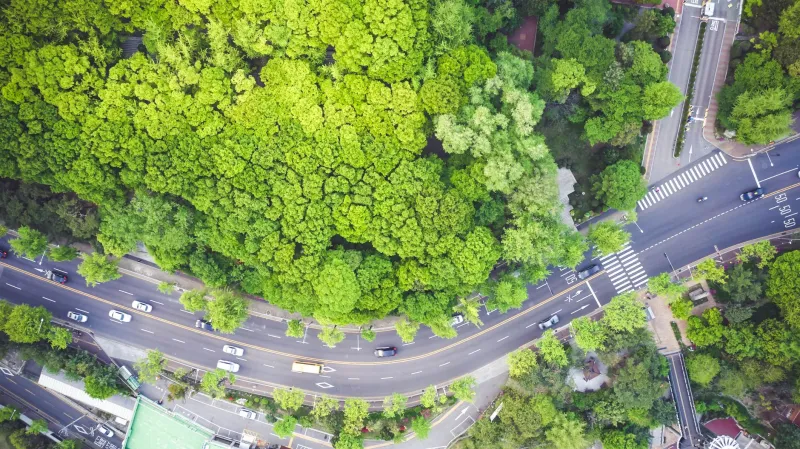
You've been there. Your city is humming along, tax revenue is climbing, and then — gridlock. A six-lane bottleneck somewhere near your downtown core turns your thriving metropolis into a parking lot with a skyline. So you do what feels obvious: you widen the road. Add more lanes. Build a bypass. Problem solved, right?
Except it isn't. Traffic comes back, somehow worse than before. You widen again. The cycle repeats. And somewhere between your third highway expansion and your first stress-induced city deletion, you've accidentally stumbled into one of the most contentious arguments in American urban policy.
Welcome to induced demand — and congrats, your city-builder just gave you a graduate-level civics lesson without charging tuition.
The Highway That Ate Your City (And a Real One, Too)
Games like Cities: Skylines, SimCity, and even the lighter mobile entries in the genre all share a core tension: roads feel like solutions until they become the problem. It's a design mechanic, sure, but it's also a near-perfect simulation of what urban planners call induced demand — the well-documented phenomenon where new road capacity generates new traffic rather than absorbing existing congestion.
This isn't just game logic. It's what happened in Houston, Texas, home to the widest freeway in the world. The Katy Freeway was expanded to 26 lanes in 2008 at a cost of roughly $2.8 billion. Within a few years, commute times had actually increased. More lanes, more cars, more chaos. Houston's experience is practically a tutorial level for understanding why your virtual city keeps jamming up no matter how much asphalt you pour.
Urban planner and gaming enthusiast Dana Whitmore (who consults for municipal transit projects in the Midwest) says she's seen this lightbulb moment happen with regular players more than once. "I've had people describe their Cities: Skylines traffic disasters to me, and I have to stop them and say — that's literally what happened in [a real city]. You just described a $400 million mistake." She laughs, but she's serious. "The game doesn't lie about the fundamentals."
The Public Transit Guilt Trip Is Real
Here's where city-builders get genuinely sneaky. Most of them make public transit expensive, slow to build, and hard to justify on a tight early-game budget. Buses and subway lines require upfront investment before you see returns. Meanwhile, roads are cheap, fast, and immediately satisfying. Sound familiar?
It should. That's almost exactly the political calculus that has shaped American infrastructure spending for decades. The interstate highway system, federal subsidies for suburban development, and chronic underfunding of urban transit networks all reflect a policy environment where roads felt like the easier, more popular choice — right up until they didn't.
Players who stick with transit investment in games like Cities: Skylines or Mini Metro eventually discover something counterintuitive: a well-connected subway grid moves far more people than an equivalent investment in road expansion. The city breathes differently. Traffic patterns shift. Land use around transit hubs changes organically. It's the kind of thing that takes years to demonstrate in a real city but about forty-five minutes to experience in a game.
"I genuinely think some of these games do a better job explaining transit ROI than most public hearings do," Whitmore says. "People absorb it because they're making decisions with their own virtual money. Stakes feel real even when they're not."
Zoning, Sprawl, and the Suburb That Broke Everything
Traffic doesn't exist in a vacuum — in games or in real life. The reason your virtual suburbs are generating soul-crushing commutes is the same reason actual American suburbs do: single-use zoning. When residential areas are miles from commercial zones, which are miles from industrial areas, everyone has to drive everywhere. That's not a bug in the game design. That's a feature that mirrors the post-war American planning philosophy that produced places like Phoenix, Atlanta, and virtually every edge city built between 1950 and 1990.
Some players figure this out instinctively and start mixing uses — putting shops near homes, placing jobs within walking distance of neighborhoods. They're essentially reinventing mixed-use zoning, a concept that urban planners have been advocating for since at least the 1960s and that cities like Portland and Minneapolis have been actively pursuing in recent years.
Others go full sprawl and then wonder why their road budget is consuming half their city's income. "The maintenance costs of low-density sprawl are brutal in Cities: Skylines," notes one popular thread on the game's Reddit community. "I didn't understand why my real city's taxes were so high until I played this game and watched my road upkeep eat everything."
That's not an accident. Game designers — particularly the team behind Cities: Skylines — have been open about their intent to model realistic urban economics. The sprawl penalty is baked in.
When Players Accidentally Recreate Real Disasters
Some of the most interesting intersections between game design and real policy come from players who, without any planning knowledge, recreate notorious real-world failures.
The "highway through the neighborhood" problem is a classic. Players building freeways through their densest urban areas to save on land costs are unknowingly echoing the urban renewal highway projects of the 1950s and 60s — projects that demolished Black neighborhoods in cities like Baltimore, New Orleans, and Syracuse. The Robert Moses era of American planning, now widely criticized, was essentially a series of decisions that looked locally rational (connect suburbs to downtown quickly) and proved regionally catastrophic.
Whitmore says she uses this connection in workshops. "I'll ask people how they routed their highway in whatever game they play. Then I'll show them a map of I-81 in Syracuse or I-94 in Minneapolis. The reactions are pretty striking. People start to understand that these weren't abstract political decisions — they were design choices made by real people who thought they were solving a traffic problem."
So What Does This Actually Mean for Players?
Nobody's saying you need a policy degree to enjoy Cities: Skylines or that tapping through a mobile city-builder is a substitute for reading a Jane Jacobs book. But there's something genuinely cool happening when millions of players independently discover that wider roads make traffic worse, that transit pays off late, and that sprawl is expensive.
These aren't radical ideas in urban planning circles. They're fairly well-established findings. But they've historically been hard to communicate to general audiences because the feedback loops in real cities play out over decades, not game sessions.
City-builders compress that timeline. They make the consequences visible and personal. And somewhere between your fourteenth highway expansion and your first functioning metro line, you might find yourself with opinions about your actual city's transportation budget that you didn't have before.
That's not a bad side effect for a game about placing virtual roads on a digital grid.
Next time your city jams up, don't just widen the highway. Try something weird. Add a bus route. Rezone a suburb. Mix some uses. You might not fix your traffic problem — but you'll understand it a whole lot better. And honestly? So would a lot of real city councils.