Why Building a City With Your Friends Usually Goes Completely Off the Rails

Imagine you and your best friend decide to build a city together. You'll divide the districts, share resources, collaborate on the transit system. It'll be great. Civilized. Efficient.
Three hours later, they've paved over your carefully planned green space to build a second industrial zone, the traffic simulation has collapsed into gridlock, and someone — you're not saying who — has rerouted the power grid in a way that makes absolutely no sense. You are no longer friends.
This is the multiplayer city-builder experience, and it's remarkably consistent across titles, platforms, and friend groups. The genre that feels so perfectly tailored to solo play seems almost allergically resistant to cooperation. But why? And are there any games that have actually cracked it?
The Fundamental Tension
City building, at its core, is a game of systems thinking. Every road placement affects traffic. Every zoning decision ripples through property values, pollution, and population growth. The reason solo city builders feel so satisfying is that you control all the variables. Your mistakes are your own. Your solutions are elegant because you designed both the problem and the answer.
Multiplayer breaks this elegance almost immediately. The moment a second player enters the simulation, you've introduced a variable you can't predict or fully control. And unlike other multiplayer genres — where unpredictability is the point — city building is specifically about reducing chaos through careful planning. A random element that drops a dungeon boss in your path is fun in an RPG. A random element that reroutes your highway interchange without asking is just infuriating.
Game designer and indie developer Kat Angelova, who has written extensively about co-op design challenges, put it bluntly in a 2023 GDC talk: "City builders are essentially single-player puzzle games with the illusion of a sandbox. When you add a second player, you're not doubling the fun — you're squaring the complexity of every decision."
The Griefing Problem Is Real
Then there's the griefing. Even in games where players ostensibly share goals, the tools of city building are also, almost by definition, tools of sabotage. You can block someone's expansion with a poorly placed road. You can drain shared resources before your partner gets a chance to use them. You can zone a massive factory right next to their residential district just to watch the happiness rating crater.
Some of this is accidental — genuine misunderstandings about shared space and resource allocation. But some of it isn't. And the problem is that city-building games rarely have robust systems for resolving these conflicts. There's no diplomacy mechanic. There's no "undo" button that both players agree to. Once the damage is done, it's done.
Games like SimCity (2013) tried to solve this with clearly delineated city boundaries — each player got their own tile, and the multiplayer element was mostly about regional trade and resource sharing. The result felt less like collaboration and more like living in adjacent apartments. You were aware of your neighbors, occasionally dependent on them, but mostly doing your own thing. It wasn't exactly the co-op dream.
The Competition Compromise
One approach that actually works better than pure co-op is competitive city building — games where players are building against each other rather than with each other. When conflict is the point, the chaos becomes part of the design.
The Anno series has leaned into this effectively. Anno 1800's multiplayer lets players compete for trade routes, resources, and island territories, and the friction feels intentional rather than accidental. You're not trying to collaborate on a shared vision — you're trying to out-develop a rival. That reframing changes everything. Suddenly the guy who grabbed the iron deposits before you isn't ruining your city; he's playing the game correctly, and now you have to adapt.
Similarly, Offworld Trading Company — technically more of an economic strategy game than a city builder, but close enough — built its entire competitive structure around the chaos of shared resource markets. Players manipulate supply and demand to sabotage each other, and it's fun because everyone knows that's the game.
The Rare Wins: Games That Get Co-op Right
True collaborative city building is rare, but it exists. A few titles have managed to make it work, usually by solving the fundamental problem of conflicting agency.
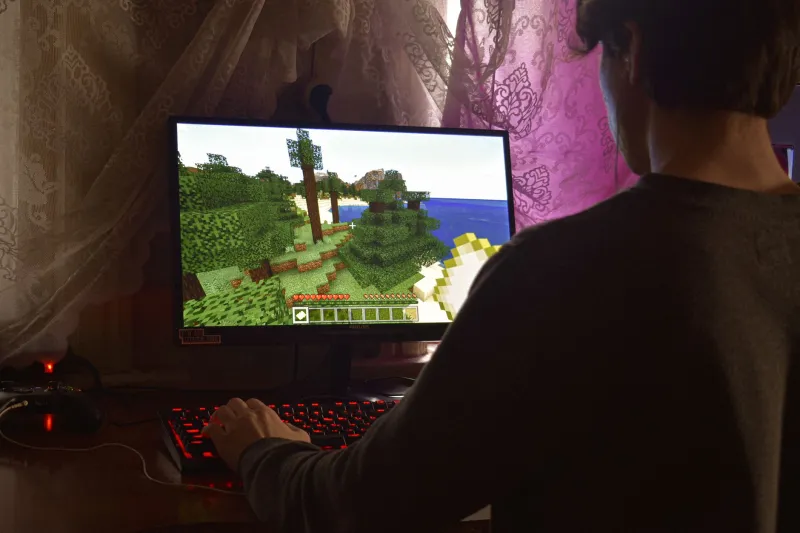
Minecraft is the obvious answer, and yes, it counts. The reason co-op building works in Minecraft is that the game has almost no systems-level simulation. There's no traffic model to break. There's no zoning code to violate. You're just placing blocks in space, and two people placing blocks in space can coexist pretty peacefully. The trade-off is depth — Minecraft is a builder, not a city builder.
Cities: Skylines with mods comes closer to a real co-op experience. The Multiplayer mod (and later, the Network Cities mod) allows multiple players to work on a shared city simultaneously. It's janky, it requires technical setup, and it still absolutely produces the "who touched my interchange" argument. But it also produces something genuine: the experience of sitting with a friend, dividing responsibilities, and watching a city grow that neither of you could have built alone. For the right kind of players, it's magical.
Minecraft Legends attempted structured co-op in a more action-oriented format, with mixed results. But it showed that developers are still actively trying to solve the problem.
Perhaps the most elegant solution in recent memory is Townscaper, which sidesteps the conflict issue entirely by removing all competitive or systemic pressure. There are no resources, no citizens to keep happy, no traffic to manage. It's just collaborative art. Two people can build a beautiful coastal village together with zero friction because there's nothing to fight over. It's not really a game in the traditional sense, but as a proof of concept for peaceful co-op building, it's nearly perfect.
What Designers Are Still Figuring Out
The honest answer is that nobody has fully cracked it yet. The designers who've gotten closest tend to share a common insight: successful multiplayer city building requires role clarity. If Player One is the infrastructure architect and Player Two is the zoning manager, and neither can override the other's domain without consent, the chaos reduces dramatically.
It's the same reason real cities work (sort of) — you have planning departments, transportation authorities, and zoning boards, each with defined jurisdictions. When everyone can touch everything, nothing gets done well. When responsibilities are divided, at least the arguments have a framework.
Some upcoming titles are experimenting with exactly this — structured co-op roles that feel less like "two people playing the same game" and more like "two people playing complementary roles in the same game." Whether that solves the fundamental tension or just relocates it remains to be seen.
Should You Even Try It?
Honestly? Yes — with the right person and the right expectations. If you go in expecting the smooth, meditative experience of solo city building, you will be disappointed. If you go in expecting something messier, funnier, and occasionally infuriating, you might end up with one of your better gaming memories.
The city builder that truly nails co-op — one that makes collaboration feel as elegant as going solo — is still out there waiting to be made. Until then, maybe agree on road placement rules before you start. It'll save the friendship.